
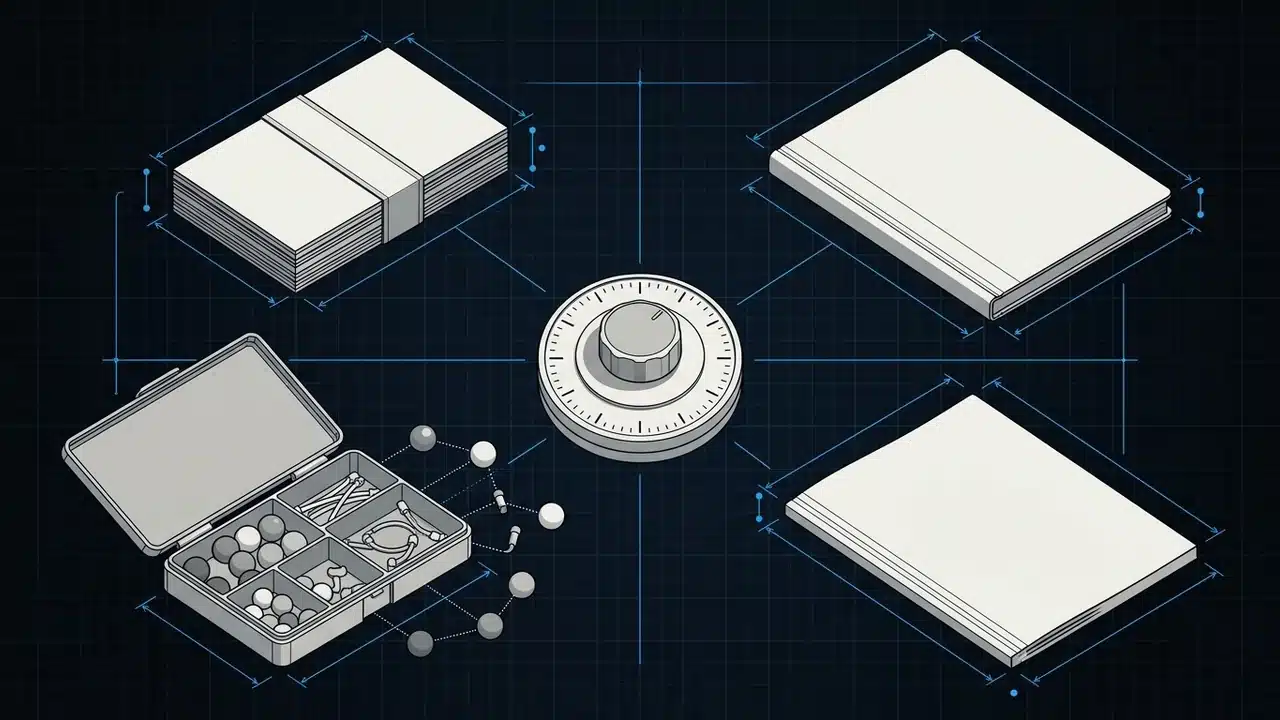
Type “study tools” into an app store and hundreds of apps, planners and gadgets show up, each promising to fix your grades. Most of them do the same few jobs, just with different colors. Science classes ask a lot of you, so the tools you pick should save time instead of becoming another thing to manage. The useful question about study tools for college students isn’t “which app is best?” It’s this: which jobs do you need a tool for, and what does each one actually help with?
The most useful study tools for college students in science classes cover seven jobs: spaced flashcards, a calendar or planner, a focus timer, a note system, a molecular model kit, a whiteboard, and a reliable source of practice tests. Each one supports a habit that learning research favors, such as testing yourself, spreading out review, or working problems by hand. You don’t need a paid version of anything to start; free options exist in almost every category. Pick one tool per job, learn it well, and stop shopping. A simple tool you use every day beats a fancy one you set up once.
Why Organize Study Tools by Job?
Organizing tools by job keeps you focused on what the tool should accomplish, which makes it easier to choose and harder to waste time. A flashcard app and a paper deck do the same job. A wall calendar and a phone calendar do the same job. The method matters more than the brand.


It also helps you notice gaps. It’s common to have three note apps and no plan for practice tests. Thinking in jobs shows where you’re covered and where you’re not.
Spaced Flashcards: For Facts You Must Know Cold
Spaced flashcards help you memorize facts that need to be automatic, such as polyatomic ions, amino acids, bone names or organic functional groups. They work because they make you recall the answer before you see it, which is a form of retrieval practice.
Spaced repetition apps, like the open-source Anki (free on desktop, Android and the web), schedule each card based on how well you know it. Cards you miss come back soon; cards you know well come back later. Quizlet is another familiar option, especially for shared class decks. A paper deck sorted into “missed,” “shaky” and “solid” piles does the same job with zero setup.
Whatever you use, answer before flipping. The Learning Scientists’ guide to retrieval practice explains why producing an answer from memory beats rereading it.
When flashcards help less
Flashcards are weak for multistep problem solving. You can’t learn stoichiometry or genetics crosses from a card. Use them for facts, and use practice problems for skills.
Calendar or Planner: For Seeing the Whole Semester
A calendar shows you every exam, lab report and deadline in one place, so nothing surprises you in week 10. Google Calendar, your phone’s built-in calendar, or a paper planner all work.
On the first week of class, enter every date from every syllabus. Then add recurring study blocks for each science class, at least three or four sessions a week. That second step is what turns a calendar from a list of deadlines into a plan.
The calendar becomes even more important at the end of the term, when you’ll need to build a finals week study schedule around several exams at once.
Focus Timer: For Starting and Staying on Task
A focus timer helps you start studying and keeps distractions out for a set block of time. The Pomodoro method (work 25 minutes, rest 5) is the best-known pattern, and many students like longer blocks such as 45 on, 15 off.
Any timer works, including the one on your phone, but a separate kitchen timer or a website timer can keep your phone out of reach. Some students also use app blockers during study blocks. The key idea is simple: decide the block length in advance, so you aren’t checking messages every few minutes.
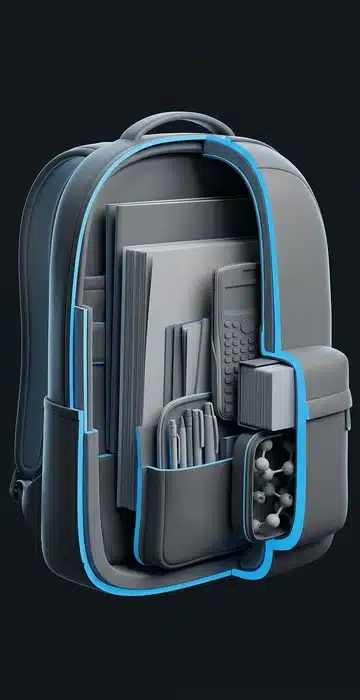
Note System: For Capturing and Reviewing Lecture
A note system holds what you learn in class and gives you something to test yourself from later. Paper notebooks, a tablet with a stylus, OneNote, Google Docs and Notion are all fine choices.
For science classes, being able to draw quickly matters. Chemical structures, cell diagrams and graphs are much faster by hand, which is one reason many students stick with paper or a tablet.
The more important habit is what you do after class. Leave space on each page for questions you can quiz yourself with later, and spend 10 minutes after lecture writing down what you remember before reviewing the notes.
Molecular Model Kit: For Seeing Shapes in 3D
A molecular model kit lets you build molecules with your hands, which helps with VSEPR shapes in gen chem and chirality, conformations and stereochemistry in organic chemistry. Many students find chair conformations and R/S assignments much easier once they can rotate a real model.
Kits are inexpensive, and some organic chemistry instructors allow them during exams, but many don’t, so check first. If you don’t have one yet, free online 3D viewers can fill the gap for a while.
Whiteboard: For Practicing Problems and Explaining Out Loud
A whiteboard gives you a big, erasable space to work problems, draw mechanisms and explain processes from memory. It’s one of the cheapest study tools for college students and one of the most underrated.
Use it for the blank-page method: draw a process like the Krebs cycle or an SN2 mechanism without notes, then check and fix it. Study groups also work well around a whiteboard, because everyone can see the steps and catch mistakes.
Practice Test Sources: For Checking What You Really Know
Practice tests show you what you can do under exam conditions, not just what feels familiar. They’re the closest thing to a preview of your grade.
Good sources include:
- End-of-chapter problems in your textbook, with answers covered until you finish
- Old exams or practice exams your professor posts
- Free open textbooks such as OpenStax Chemistry 2e, which include exercises with answers
- Your campus learning center or tutoring office, which may keep practice materials by course
- Official study guides for standardized finals, if your course uses one
- Online ACS-style chemistry practice exams like ours, if your chemistry class ends with a standardized final (every question comes with a video solution)
Take at least one practice test under timed conditions before each exam. Then spend as much time reviewing your misses as you spent taking it.
Which Study Tools for College Students Should You Start With?
Start with three: a calendar, a flashcard system, and a source of practice problems. Those cover planning, memorizing and skill practice, which is most of what science classes demand. Add a timer if you struggle to start, a model kit if you’re in organic chemistry, and a whiteboard whenever you can.
| Job | Free or low-cost option | Best for |
|---|---|---|
| Spaced flashcards | Anki, Quizlet, paper deck | Ions, terms, structures |
| Calendar or planner | Phone calendar, paper planner | Deadlines, study blocks |
| Focus timer | Phone or kitchen timer | Starting, avoiding distractions |
| Note system | Notebook, OneNote, Google Docs | Lecture capture and review |
| Model kit | Basic kit or online 3D viewer | Shapes, stereochemistry |
| Whiteboard | Small board or dorm wall board | Problems, drawing from memory |
| Practice tests | Textbook, professor, OpenStax | Checking real readiness |
Fewer Tools, Better Habits
The best study tools for college students in science classes are the ones that make you recall, practice and plan. Flashcards, a calendar, a timer, a note system, a model kit, a whiteboard and practice tests each handle one job, and together they cover nearly everything a science course asks of you.
Resist the urge to collect apps. One tool per job, set up in under an hour and used daily, will do more than a folder full of downloads. The tool matters a little. The habit matters a lot.