
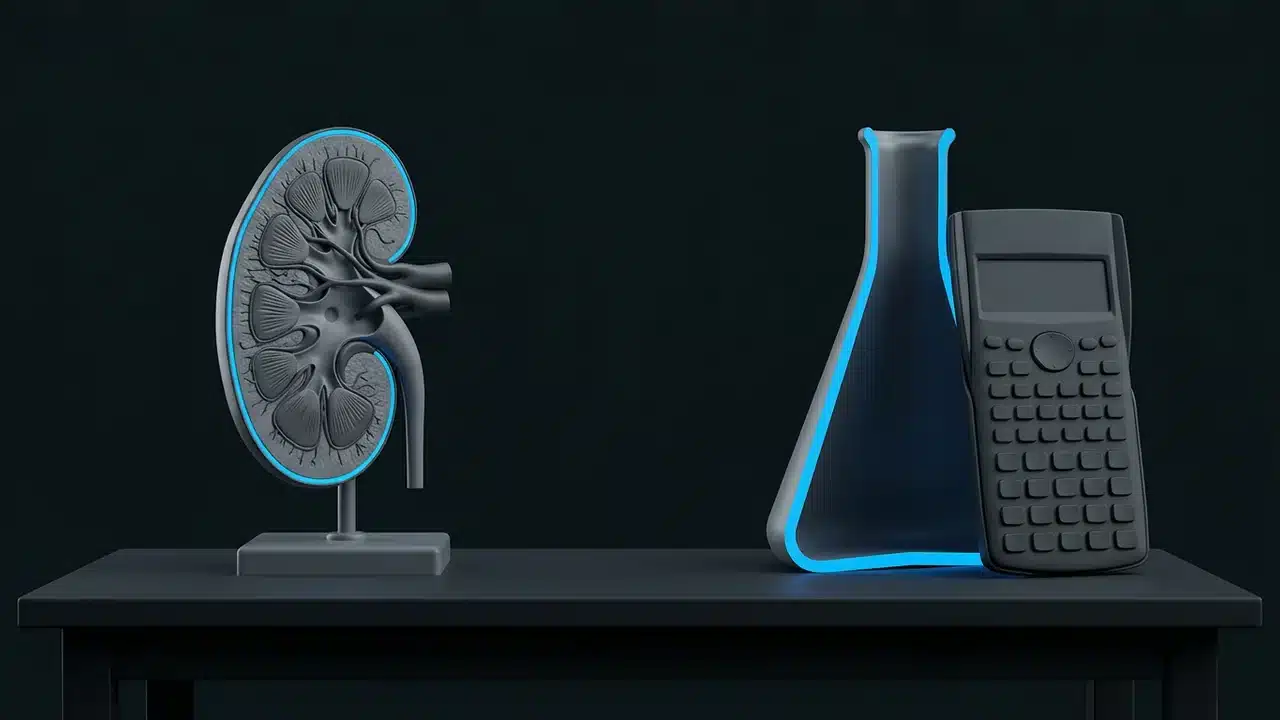
If you’re pre-nursing or pre-health, there’s a good chance anatomy and physiology and general chemistry land on your schedule close together, maybe even in the same semester. And everybody has an opinion. Your roommate swears A&P nearly ended her. Your lab partner says chemistry is the real monster. Who’s right? Is anatomy harder than chemistry?
Neither class is harder for everyone; anatomy is usually harder for students who struggle with heavy memorization, and chemistry is usually harder for students who struggle with math and multi-step problem solving. A&P asks you to learn a huge amount of vocabulary, structures and processes and then apply them. Gen chem asks you to learn a smaller set of ideas and then use them in calculations over and over. Both have labs, both move fast and both can be passed with steady work. The better question is which one will be harder for you, and there’s a quick way to find out.
How Are A&P and Gen Chem Different?
They test different muscles. A&P is mostly a memory-and-understanding class. Chemistry is mostly a problem-solving class. Here’s how they compare side by side. Courses vary by school and instructor, so treat this as the general pattern. Many pre-nursing tracks accept an intro or GOB chemistry course instead of General Chemistry I, and those usually move at a gentler pace than the gen chem column below.


| Feature | Anatomy & Physiology | General Chemistry |
|---|---|---|
| Main skill | Memorizing and connecting lots of terms and structures | Solving problems step by step |
| Math | Light, mostly in physiology topics | Constant: algebra, unit conversions, ratios |
| Volume of new terms | Very high | Moderate |
| Lab style | Models, specimens, identifying structures, lab practicals | Measuring, mixing, recording data, lab reports |
| Exam style | Identification, definitions, processes, application | Calculations and concept questions, often multiple choice |
| How you get stuck | You forget names or mix up similar structures | You don’t know where to start a problem |
Why Do Some Students Find Anatomy Harder?
Mostly because of the sheer volume. You’re learning bones, muscles, nerves, vessels, cell types and how all the systems keep the body in balance. The free OpenStax Anatomy and Physiology textbook gives you a sense of how much ground the course covers. It’s a lot of pages.
Then there’s the lab practical. You walk up to a station, there’s a model or specimen with a pin in it, and you have a short time to name the structure before you rotate. If you’ve only studied from a list, that’s rough. Many students say the practicals are the scariest part of A&P.
Physiology adds a second layer. It’s not enough to know the name of a structure. You need to explain what it does, what happens when it fails and how it connects to other systems. That’s real thinking, not just memorizing.
Why Do Some Students Find Chemistry Harder?
Because chemistry is cumulative and math-heavy. Moles show up in week 3 and then never leave. If you don’t get unit conversions early, stoichiometry falls apart, and then solutions and gas laws fall apart after that. A&P can feel a bit more forgiving because a confusing unit on bones doesn’t wreck your unit on the nervous system.
Chemistry also has a “staring at the problem” problem. You can know every definition and still freeze on a calculation because you’re not sure what step comes first. That feeling is normal, and the fix is practice, not more reading. Lots of students who are great at memorizing are surprised to find that flashcards alone don’t save them in gen chem.
Which Class Takes More Time Each Week?
Usually it’s close, but the time feels different. A&P time tends to be steady review: going over terms, redrawing diagrams and quizzing yourself so last week’s material doesn’t fade. Chemistry time tends to come in chunks: an online homework set that takes way longer than planned, or a lab report that eats a whole evening.
The trap in A&P is waiting until the night before to memorize three chapters. The trap in chemistry is skipping problems because you “get it” in lecture. Both traps feel fine right up until the exam.
So, Is Anatomy Harder Than Chemistry for You?
Try this quick self-check. Be honest. Nobody’s grading it.
- Did high school biology feel easier than algebra? Chemistry will probably feel harder.
- Do you like puzzles and figuring out how to get from point A to point B? Chemistry may click faster.
- Can you learn a list of 50 terms in a few days without much stress? A&P will likely feel manageable.
- Do you panic when a word problem has three numbers in it? Plan extra time for chemistry.
- Do you forget things you studied two weeks ago? A&P will test that hard, so start spaced review early.
If you checked a mix, welcome to being a normal student. Most people are stronger at one style and have to work on the other.
Should You Take A&P and Chemistry in the Same Semester?
You can, and lots of pre-health students do, but go in with a plan. Two lab sciences means two sets of lab hours, two sets of exams and possibly two lab practicals or lab reports landing in the same week. Check your program’s prerequisite order too, since some programs want chemistry before A&P and requirements vary by school.
If you do stack them, keep your study styles separate. For A&P, use flashcards, drawing and self-quizzing on a schedule. For chemistry, do problems, ideally a few every day. Our article on how to get an A in chemistry goes into the problem-solving routine in more detail.
And if your gen chem class ends with an ACS-style final, plan a run through our Gen Chem 1 practice exam, which is modeled on that style, for the last few weeks of the term, so the final’s format isn’t one more surprise in an already full semester.
Both Are Hard, Just in Different Flavors
Is anatomy harder than chemistry? That comes down to how your brain likes to work. A&P is a memory marathon with lab practicals. Chemistry is a problem-solving class where every unit builds on the last one. Neither one is the easy class, and anyone who tells you otherwise probably took only one of them.
Figure out which style is your weak spot and give that class a little more of your week from the very start. You don’t need to be naturally good at both. You just need to stop being surprised by the one that’s harder for you.