
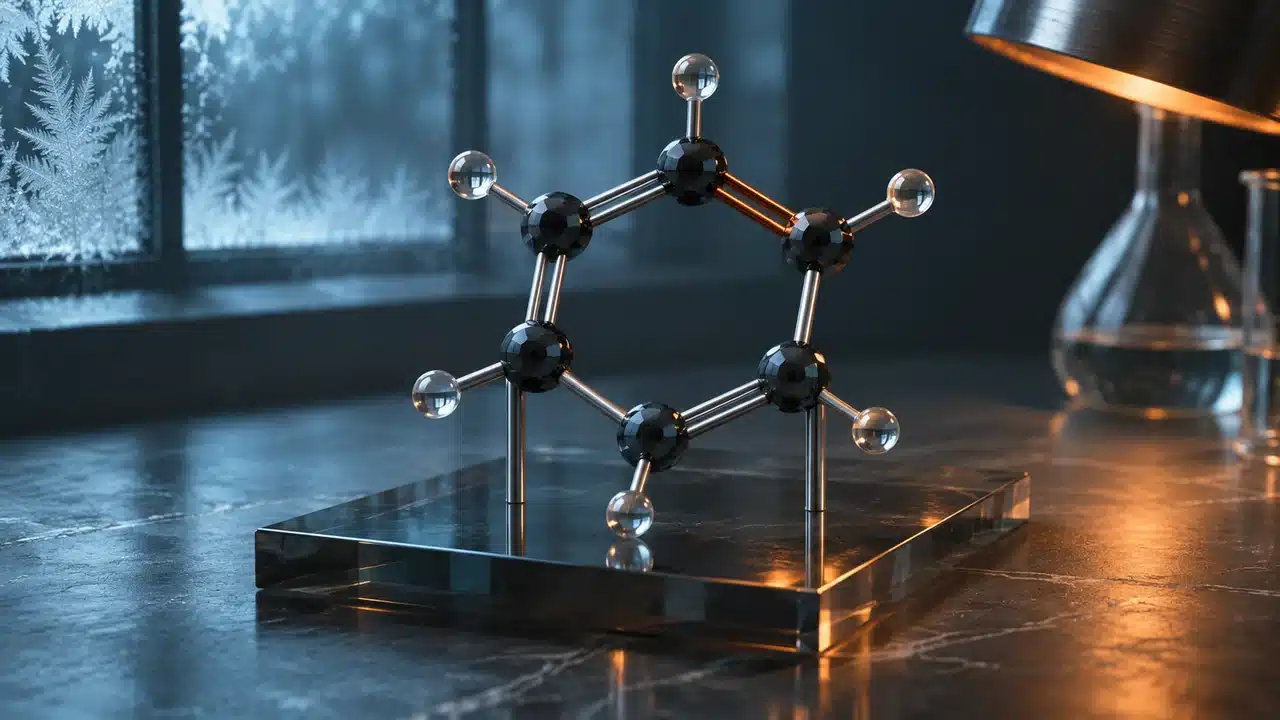
You just survived Gen Chem. The final is done, the grades are posting, and the last thing you want to hear is the word “organic.” But it’s on your January schedule, and everyone has an opinion about it. Some people say to start studying now. Others say to sleep for a month. So how do you prep for organic chemistry over winter break without wrecking your break?
The best way to prep for organic chemistry over winter break is to spend a few short sessions a week refreshing the gen chem ideas orgo is built on, not trying to learn orgo early. Focus on Lewis structures, formal charge, hybridization and molecular shape, electronegativity and polarity, resonance, and acids and bases. Then practice drawing skeletal structures until they feel normal. Skip reaction memorization, gas laws and most of the math from Gen Chem 2. About three light weeks, after you’ve actually rested, is plenty.
Should You Study Organic Chemistry Over Winter Break at All?
Yes, a little. Not a lot. Here’s the honest version.


Orgo moves fast from the first week, and the first few weeks lean hard on bonding ideas from Gen Chem 1. If those are rusty, you spend January relearning old stuff while new stuff piles up. A short refresh fixes that. You’ll walk into lecture recognizing words instead of panicking at them.
What doesn’t work is trying to teach yourself the whole course before it starts. You’ll burn out, you’ll learn things in a different order than your professor teaches them, and you’ll show up in January already tired. If you want the full picture of what the semester will throw at you, read our guide on how to pass organic chemistry. This article is just about the break.
Rest First. Seriously.
Take the first several days completely off. No flashcards, no “just one video.” You finished a semester of 2 a.m. problem sets, and your brain needs to be bored for a while.
This isn’t laziness, it’s planning. A rested brain learns better than a fried one, and you’re going to need that energy in February. Go home, see people, play the game, watch the show. Start the review once you can think about chemistry without groaning out loud.
What Gen Chem Topics Should You Review Before Orgo?
Review the bonding and structure chapters of Gen Chem 1, plus acids and bases. Those show up on day one of orgo and never leave. Many orgo textbooks spend their first chapters re-teaching exactly this material, so you’re getting a head start on the course’s own opening.
Lewis Structures and Formal Charge
You need to draw Lewis structures fast and correctly, including lone pairs. Carbon makes four bonds, nitrogen usually three with one lone pair, oxygen usually two with two lone pairs. Formal charge is valence electrons minus nonbonding electrons minus bonds. Practice until you can spot a charged atom just by counting its bonds and lone pairs.
Hybridization and Molecular Shape
Know sp3 (tetrahedral, about 109.5°), sp2 (trigonal planar, 120°) and sp (linear, 180°). In orgo you’ll look at a carbon and name its hybridization in a second, and that tells you its shape. If VSEPR felt shaky in the fall, this is the topic to fix.
Electronegativity and Polarity
Remember the trend: electronegativity increases from left to right across a period and from bottom to top in a group, so fluorine is the most electronegative element. In orgo this decides where electrons sit in a bond, which decides where reactions happen. Polarity also explains boiling points and solubility, so review intermolecular forces while you’re here.
Resonance
Resonance structures are a big deal in orgo. Practice moving lone pairs and pi bonds (never single bonds, never atoms) to draw resonance forms. Get used to the idea that the real molecule is a blend of them. It’ll make curved arrows much easier later.
Acids and Bases
Know conjugate acids and bases, and know that a lower pKa means a stronger acid. The big orgo question is why one acid is stronger than another, and the answer is almost always about how stable the conjugate base is. If you only have time for one topic, make it this one.
How Do You Draw Skeletal Structures?
In a skeletal (line-angle) structure, every corner and every line end is a carbon, and the hydrogens on carbon aren’t drawn. You’re expected to know they’re there. Other atoms, like O, N and Cl, get written in, along with any hydrogens attached to them.
This is the one new skill worth starting early, because orgo professors switch to skeletal drawings almost immediately. Take a few molecules you know, like propane or ethanol, and draw them three ways: full Lewis structure, condensed formula, and skeletal. Then go backward, from skeletal to full. Count the hydrogens on each carbon every time. It’s boring and it works.
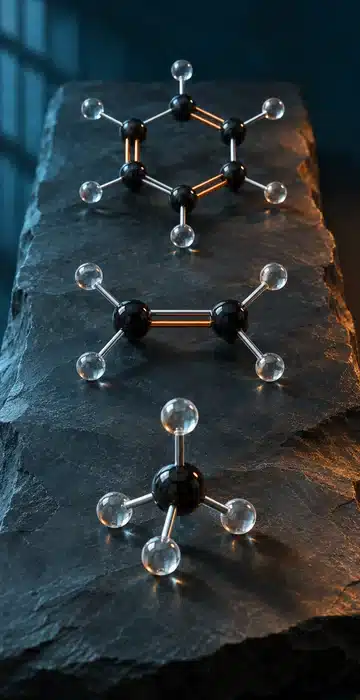
Bonus: if you can borrow or buy a cheap molecular model kit, play with it. Building a chair or a tetrahedral carbon in your hands makes 3D shapes way less mysterious.
What If You Barely Passed Gen Chem?
Then this break matters more for you, and that’s okay. Barely passing Gen Chem doesn’t doom you in orgo. The class rewards a slightly different skill set, more about seeing patterns in structures than crunching numbers, so some students who fought the math find orgo clicks better.
Be honest about which topics felt shaky. Pull up your old exams and look at what you missed on bonding, shape and acids and bases. Those misses are your study list. Give the weakest one an extra week if you need it, and push skeletal drawings into the last few days.
And if a topic still won’t click by January, bring it to office hours in week one. Professors love that question early. It is a much harder conversation the week before the first exam.
What Can You Skip?
Skip anything orgo doesn’t use right away. You have limited energy this break, so don’t spend it here:
- Memorizing named reactions. You don’t have the background for them yet, and they’ll make more sense in context.
- Gas laws and most of the stoichiometry math.
- Kinetics calculations, equilibrium ICE tables and electrochemistry.
- Watching a full orgo lecture series start to finish. Sounds productive. Mostly isn’t.
Orgo is less about calculations and more about pictures and patterns. Your calculator can rest too.
A Light Three-Week Plan for Organic Chemistry Over Winter Break
Plan on 30 to 45 minutes a day, about five days a week, starting once you’ve rested. If your break is shorter, squish it into two weeks. If you miss a day, nobody is grading this.
- Week 1: Lewis structures, formal charge, VSEPR and hybridization. Do practice problems from your old Gen Chem textbook or a free one like OpenStax Organic Chemistry, which opens with these same ideas.
- Week 2: Electronegativity, polarity, intermolecular forces and resonance. End the week by drawing resonance forms for a few simple ions.
- Week 3: Acids and bases, then skeletal structures every day. Learn to recognize the common functional groups (alcohol, ketone, carboxylic acid, amine) by sight. Don’t learn their reactions yet.
Test yourself instead of rereading. Cover the answer, draw the structure, then check. That’s the habit that’ll carry you through the semester.
What About the Orgo Final?
Don’t think about it yet. Really. But it helps to know what the end looks like, so file this away for later in the semester: our Org Chem 1 final practice exam is built for the end of the semester, when you’ll want a timed run with every question explained on video. Over break, stick to the basics above.
Show Up in January Rested and a Little Dangerous
Prepping for organic chemistry over winter break is mostly about not starting cold. Rest first. Then give three light weeks to bonding, shape, polarity, resonance, acids and bases, and skeletal drawings. Skip the reactions and the Gen Chem math.
You won’t know orgo on the first day, and you’re not supposed to. You’ll just know the language it’s written in, which puts you ahead of most of the room. Go enjoy the rest of your break.